Hakan Yavuz: Why Turkey’s Islamists and Liberals Blame İttihatçılık and Kemalism for Everything?
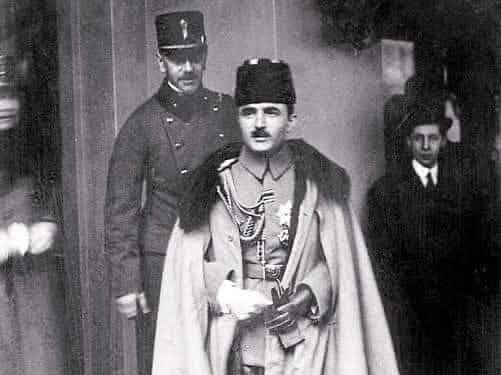
There is a fashionable consensus among Turkey’s liberal and Islamist commentators—Ahmet Altan among them—that “the Young Turks destroyed the Ottoman Empire, and it is impossible to understand how their mentality still survives in Turkey today.” (1) This line is repeated so reflexively that it has become an article of faith. But it is historically shallow and intellectually lazy. Worse, it allows today’s Islamists to hide behind a distorted past, using history as a moral shield to avoid responsibility for their own political failures.
Into this landscape enters Etyen Mahçupyan, who has recently revived his long-standing argument that Turkey is witnessing the emergence of a “New Unionism” (Yeni İttihatçılık) (2) —an ideological refounding of the Republic under Erdoğan, supposedly aligned with global shifts, post-liberal realities, and new sociological dynamics. According to Mahçupyan, Kemalism is exhausted, modernity is collapsing, and Erdoğan’s Turkey is riding the wave of a new global “realism.” In his telling, the opposition remains imprisoned in outdated reflexes while the government is forging a coherent, adaptive, almost visionary project.
It is a seductive narrative—precisely because it grants the current regime a historical pedigree, an ideological coherence, and a strategic depth it does not possess. But Mahçupyan’s thesis rests on fundamental misreadings, wishful thinking, and a psychological tendency to legitimize whichever power center he believes to be ascendant.
What is İttihatçılık? İttihatçılık was the ideological and activist movement that aimed to save and modernize the Ottoman state through centralization, nationalism, and revolutionary politics. The Committee of Union and Progress (CUP / İttihat ve Terakki Partisi) was the organizational and party structure through which this worldview was institutionalized and exercised state power, especially after 1908. In short, İttihatçılık was the worldview; the CUP was its political instrument. Today, both liberals and Islamists identify İttihatçılık as the source of the moral and institutional collapse in the country.
Islamist commentators, just like Mahçupyan, claim that the CUP “turned centralization into an ideology,” alienated identities, and failed to build consent due to trauma and impatience. This is ideology masquerading as analysis. Every major ethnic rebellion that fractured the empire—from the Balkans to the Arab provinces—predates the CUP as a political force. They did not create nationalism; they inherited an empire collapsing under its weight. Yet Islamists and their intellectual allies prefer a moralized caricature: the İttihatçılık as the origin of all authoritarian reflexes, and themselves as the moral alternative.
This reveals something deeper: the persistence of an imperial fantasy among Islamists, and increasingly liberals as well—a longing that distorts their reading of the past and blinds them to the failures of the present. Rather than confronting their own role in the devastation of state institutions, the erosion of legality, and the collapse of meritocracy, they displace responsibility onto the Committee of Union and Progress. The CUP becomes a convenient historical culprit, invoked to explain the decay of today’s Turkey. History, in this reading, is no longer a field of critical inquiry but a moral dumping ground, a way of outsourcing accountability to a distant past instead of reckoning with the political choices and complicities of the present.
It is crucial to recall that the secular nation-state projects undertaken first by the CUP and then by Mustafa Kemal were not ideological whims but structural necessities. By the late 19th century, the international system had been reorganized around nation-states. The Empire was no longer viable. Homogenization, legal standardization, and centralized authority were the global price of political survival. To deny this, as Mahçupyan does implicitly, is to misunderstand the very architecture of modernity.
But Mahçupyan’s misreading extends further. His “New Unionism” thesis fails for three decisive reasons.
First, he fundamentally misunderstands İttihatçılık itself.
The original CUP—despite its catastrophic errors—was institutional, technocratic, and statist. It possessed a bureaucratic rationality and a developmental vision, however flawed. Today’s regime has none of these qualities. It is ideologically thin, institutionally hollowed-out, and structurally prebendal. Ottoman nostalgia, civilizational rhetoric, and the “Century of Turkey” narrative serve not as guiding philosophies but as flexible instruments of mobilization. To liken Erdoğan’s personalist neopatrimonialism to a reborn İttihatçılık is to grant historical dignity to what is essentially a system of improvisation, extraction, and loyalty to one man.
Second, Mahçupyan ignores the material logic of the present regime.
Erdoğan’s Turkey is not guided by the pursuit of collective goods such as the nation, the state, justice, or even a coherent ideological project. It is driven by survival, enrichment, and the consolidation of a patronage network. Public wealth is redistributed to loyalists; institutions are captured; the judiciary is weaponized; foreign policy oscillates not as part of a sophisticated new strategy but as a series of tactical bargains to secure financial lifelines. Mahçupyan mistakes kleptocracy for ideology and decay for reinvention.
Third, Mahçupyan’s own intellectual path influences his biases. His career follows a trend: he aligns with whichever power appears to be rising. When the Gülenists dominated the state, he supported it as a moral force for democratization. When it fell apart, he disavowed it. Today, he applies the same open-mindedness to Erdoğanism, framing its authoritarian and corrupt actions with the language of grand theory. One could almost suggest a political rule: if you want to predict which actor will eventually fail, watch whom Mahçupyan begins to intellectually idolize. Yet even this is not the deepest issue. It is his psychological tendency—what might be called a minority complex—to seek belonging with strong centers of authority, translating raw power into moral narratives. This produces analyses calibrated not to scrutinize authority but to legitimize it.
İttihatçı Kemalism as the Foundational Sin: A Convenient Genealogy for Avoiding Responsibility
Islamists and liberals in Turkey often converge on a simplified narrative that treats Kemalism as the direct continuation—and therefore the inheritor—of İttihatçılık. This framing allows both camps to project their contemporary frustrations and political shortcomings onto a pair of historical ideologies. For Islamists, equating Kemalism with İttihatçılık provides a moralizing explanation for the Kurdish issue, authoritarianism, and social engineering: all are dismissed as residues of a secular-nationalist “Jacobin” mindset. Liberals, likewise, use the same genealogy to argue that Turkey’s democratic deficits stem from an unbroken tradition of state-centrism and nationalist tutelage. In both cases, İttihatçılık and Kemalism function less as analytical categories and more as rhetorical containers into which every failure—corruption, polarization, institutional decay—is poured. This reductionist reading absolves contemporary actors of responsibility and obscures the complex political, economic, and ideological forces shaping present-day Turkey.
Islamists have long instrumentalized the Kurdish issue as a way to attack Kemalism. (3) Their argument, repeated for decades with remarkable simplicity, runs something like this: “Kemalist nation-building and secularism created Kurdish nationalism. If we remove Kemalism and emphasize Islamic unity, the Kurdish problem will dissolve.” This claim has always been more ideological fantasy than political analysis. It assumes that Kurdish identity is an artificial byproduct of Kemalist policies rather than a genuine ethno-political movement shaped by its own history, grievances, aspirations, and regional dynamics. It also ignores the fact that Kurdish nationalism predates the Republic and emerged as part of the broader collapse of empires across the Middle East.
Yet Islamist conservatives continue to recycle this narrative. In their view, the state’s difficulties in managing the Kurdish issue reflect the lingering presence of “İttihatçı reflexes”—a leftover Unionist mentality supposedly obsessed with centralization and uniformity. According to this argument, Turkey’s inability to embrace the Kurdish-led experiment in northern Syria (Rojava) stems not from contemporary security realities but from a century-old psychological trauma.
This is not analysis; it is nostalgia disguised as critique.
Reducing today’s Kurdish question to the ghost of 1908 allows Islamists (4) to avoid confronting the present. It conveniently ignores the concrete geopolitical landscape Turkey faces: a PKK-linked militia operating along its border, the establishment of a de facto autonomous zone run by the PYD/YPG, and an American-led strategic realignment in northern Syria that has empowered these structures. The PYD’s governance model—with its one-party dominance, ideological indoctrination, and coercive practices—hardly resembles the romanticized democratic pluralism that Islamist commentators imagine.
Turkey’s concerns should be understood within the framework of the modern nation-state and the real challenge posed to its territorial integrity by Kurdish secessionist nationalism. Whatever one’s normative position, it is rational for any state to defend itself against an armed movement that openly seeks to redraw borders. These security concerns are not relics of the CUP or symptoms of inherited paranoia. They arise from a concrete, ongoing conflict with the PKK and its regional extensions. Even those who advocate political dialogue should acknowledge that today’s dilemmas are rooted in present-day insurgency and warfare, not in psychological residues of the Ottoman collapse or CUP-era policies.
Mahçupyan and other Islamist commentators routinely invoke “İttihatçı reflexes” as a catch-all explanation for nearly every problem Turkey faces—from the Kurdish question to democratic backsliding, from corruption to the sprawling networks of kleptocracy that have flourished under their own political camp. In their narrative, the fault always lies with a supposedly lingering Unionist mentality inherited from the late Ottoman era. This framing allows them to moralize contemporary crises without ever confronting the actual causes: the deliberate dismantling of institutions, the personalization of power, the erosion of rule of law, and the vast enrichment of partisan elites over the past two decades.
By attributing today’s structural failures to a century-old psychological residue, Mahçupyan and his peers transform history into a rhetorical shield. “İttihatçı reflexes” becomes a metaphysical culprit—vague enough to blame for everything, convenient enough to excuse those who actually govern. Instead of analyzing how present-day policies, incentives, and power dynamics produce the country’s dysfunctions, they retreat into historical allegory. In this sense, history is not used as an analytical guide but as a moral prop, a way to avoid responsibility while advancing an illusion of intellectual depth.
This method of explanation is politically useful but intellectually hollow. It allows Islamists to pose as interpreters of Turkey’s deep historical psyche while deflecting attention from the corruption, institutional decay, and authoritarian excesses that have unfolded entirely under their own watch.
More importantly, the Kemalist state Mahçupyan and Islamist commentators blame no longer exists. It has been dismantled—deliberately—by the very Islamist elites he sympathetically reinterprets. Since 2002, Islamists have ruled Turkey without interruption. For the past decade, Turkey has not been governed by “reflexes” but by a personalist executive who has captured the judiciary, media, bureaucracy, and military promotions system.
So why insist on blaming the Young Turks or Kemalism? Why conjure the ghosts of 1908 to explain the failures of 2025?
The answer is simple: some liberals and Islamists—and their intellectual fellow travelers—cannot confront their own complicity. They supported the dismantling of institutional checks and balances. They celebrated the personalization of power. They endorsed a ruler who dismantled the state’s internal ethics and replaced them with loyalty networks and clientelist extraction. Blaming the CUP is political deflection; invoking Kemalism is a psychological refuge.
In short, Mahçupyan continues to weaponize history in the service of contemporary authority. His “New Unionism” thesis offers intellectual elegance at the cost of empirical truth. It obscures the hollowing out of the Republic, the subordination of state institutions to personal power, and the moral collapse of the Islamist project.
Turkey does not need refounding myths. It requires an honest reckoning with what has been dismantled, what is being looted, and what must be rebuilt. The regime now presiding over Turkey is not the rebirth of Unionism—it is the exhaustion of the Republic. The sooner we stop aestheticizing the present, the sooner we can imagine a democratic future.
Finally, the relentless invocation of history to explain Turkey’s present crisis has become a convenient moral alibi for Islamists and their liberal allies. By blaming the founding philosophy of the Republic—and endlessly recycling the specter of İttihatçılık—they evade responsibility for their own political choices, institutional destruction, and ethical failures. History is no longer used to illuminate complexity or foster accountability; it is weaponized to deflect guilt and legitimize power. This abuse of the past allows those who dismantled the rule of law, hollowed out state capacity, and normalized corruption to present themselves as victims of a century-old inheritance. The tragedy is not that the Republic was founded with tensions and contradictions—every modern state is—but that its critics have replaced principled critique with historical scapegoating, turning memory into an instrument of denial rather than a resource for moral reckoning.
1- https://medyascope.tv/2025/12/04/devlet-akli-ve-rojava-tarik-celenk-yazdi/
2-https://serbestiyet.com/gunun-yazilari/kemalizm-mi-daha-iyi-yeni-ittihatcilik-mi-222774/
3- https://medyascope.tv/2025/12/04/devlet-akli-ve-rojava-tarik-celenk-yazdi/
4-https://medyascope.tv/2025/12/10/tarik-celenk-ile-sagduyu-85-ahmet-altan-ile-soylesi-i-turkiyenin-degismeme-problemi-ittihat-ve-terakki-zihniyeti/







Yorum gönder