Ali Hüseyin Guluzade: Persian motifs: US vs. Iran. Round 3 – Between war and diplomacy in Geneva (Switzerland)

On February 17, 2026, the next round of negotiations – critically important indirect talks between the US and Iran – will take place in Geneva (Switzerland). Future events concerning not only Washington and Tehran but the entire Middle East region will depend directly on these talks. This material explains what the results of the negotiations might lead to and what the likely outcome will be overall.
Negotiations between Trump and Netanyahu
On February 10, 2026, ahead of a meeting with Israeli Prime Minister Benjamin Netanyahu, US President Donald Trump reiterated his thesis that Iran cannot possess nuclear weapons or ballistic missiles, while simultaneously putting forward the idea of deploying another aircraft carrier to the region. Regarding the results of the talks with the Israeli Prime Minister, it became known that Trump did consider a strike on Iran and even a naval blockade scenario but postponed the idea due to concerns about a sharp rise in oil prices and disruptions in the Strait of Hormuz.
Regarding Netanyahu’s visit specifically, as became evident after the results, Netanyahu was unable to influence the American side’s decision regarding a radicalization of the line toward the Islamic Republic. Israeli officials and experts also expressed alarm, warning that the talks in Geneva risk leading to a “disadvantageous” deal, citing the excessive influence of regional players on the Trump administration.
Position and “signals” from Tehran
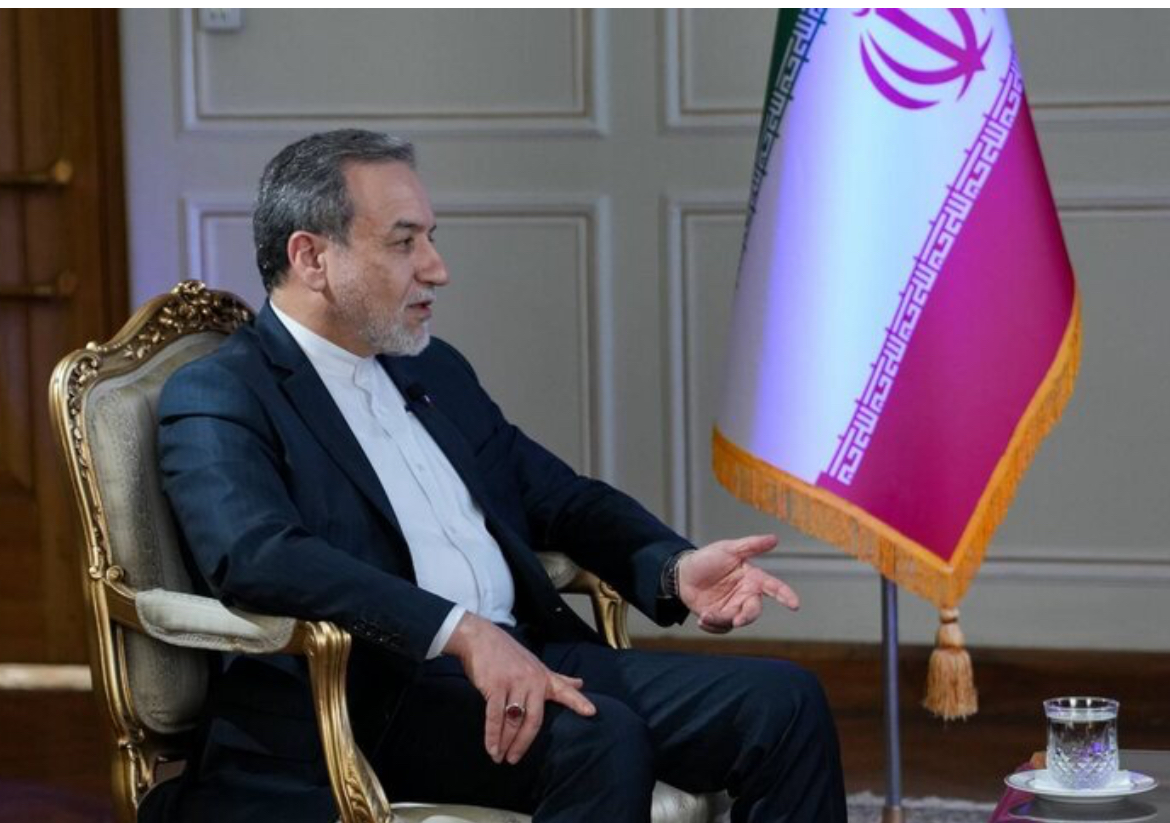
The fears of the Israeli political and expert community are not in vain, as the rhetoric from the Iranian side has not softened in the slightest. For example, in his public appearances, Iran’s Supreme Leader Ali Khamenei continues to maintain harsh rhetoric, and Foreign Minister Abbas Araghchi shows no sign of softening his position on the negotiation agenda.
Nevertheless, there are certain signals. On February 9, 2026, the head of the Atomic Energy Organization of Iran, Mohammad Eslami, publicly declared Tehran’s readiness to compromise regarding the reduction of enriched uranium stockpiles (60%) in exchange for the full lifting of US sanctions. Meanwhile, Ali Larijani, an advisor to the Supreme Leader (and member of the Expediency Discernment Council), called on the US to resist Netanyahu’s influence, warning that any imposition of Israeli demands could lead to “catastrophic consequences.”
On February 11, 2026, it became known from open sources (satellite imagery) that Iran had fortified its nuclear facilities by blocking entrances with sand, which is likely intended to hinder hypothetical airstrikes or US special forces raids on these points. On the same day, US Vice President J.D. Vance confirmed Trump’s words, clarifying the American side’s priorities: Tehran cannot possess nuclear weapons, while simultaneously presenting regime change as an “internal matter for the Iranians.”
Trump’s threats and White House demands
On February 13, Trump again openly advocated for regime change in Iran, calling it the “best thing that could happen” after 47 years of “talk and talk.” He once again ruled out any uranium enrichment and suggested that war is “inevitable.” It also became known that the American president gave the Iranian side “a month’s time.”
On the same day, the US announced the deployment of the world’s largest aircraft carrier, the USS Gerald R. Ford, to the Middle East, potentially creating a presence of two carriers (alongside the previously arrived USS Abraham Lincoln). Later, it became known that Trump gave the green light for Israeli strikes on Iran’s ballistic missiles in the event that the negotiations with Iran in Geneva fail.
On February 14, world media reported on the second round of Iranian-American talks in Geneva on Tuesday, February 17, 2026, calling it “decisive” and potentially the last opportunity to prevent war.
A few hours after the date and venue of the talks were clarified, reports spread that Iran categorically rejected the US proposal concerning:
– A complete ban on uranium enrichment for 3-5 years, followed by a limit of up to 1.5%;
– The transfer of 400 kg of uranium enriched to 60%;
– And the absence of sanctions relief in exchange for a “promise not to attack” Tehran.
February 15 became a notable date in the context of regional shifts. Representatives of the Taliban (Afghanistan) expressed full support for Iran in any war with the US. Simultaneously, reports appeared regarding the movement of Russian cargo planes, which, according to open-source information, delivered modern Mi-28 attack helicopters to Iran. In this context, according to the latest reports, Donald Trump stated that he would participate “indirectly” in the indirect talks in Geneva.
– The Geneva negotiations on February 17, 2026, in the event of failure, can indeed be characterized as potentially the “last ones before the start of a (hypothetical) war”; at the same time, regional players such as Israel, Russia, China, and the Taliban add their own complexities to this context.
– It is obvious that both the US and Iran are leaving “space” for diplomatic maneuvers on the table, but a deep asymmetry in expectations is also evident. The US position – zero uranium enrichment and limitation of missile armaments – contradicts Iran’s main demands for sanctions relief and sovereignty.
– It is highly probable that the main topic of the negotiations in Geneva will not be so much about limiting Tehran’s uranium enrichment, but rather about the cessation/reduction of ballistic missile production by Iran.
– A possible compromise in the “missile dossier” could be: a) a reduction of ballistic warheads by Tehran and b) a guarantee of not attacking Israel first. The maximalist US demands for a complete cessation of ballistic missile production are likely excluded, as this is genuinely a matter of national security for Iran.
– Iran’s hard line in the negotiations is heavily influenced by the support of Russia and China, which forces the Trump administration to approach certain issues with the Iranian side more strictly.
– Military signals (aircraft carriers, fortifications, alliances), aside from being an element of pressure “on the ground,” also indicate that both Washington and Tehran are nevertheless preparing for failure.
– Given that approximately February 17-18, 2026, marks the beginning of the holy month of Ramadan in the Muslim world – one of the forbidden months in Islam – a hypothetical failure in Geneva followed by confrontation is fraught with higher risks for the American side. This would give some radical Shia cells throughout the Middle East additional ideological motivation, potentially even attracting some loyal Sunni groups to their side. In other words – the risk of a regional war.
– In the best-case scenario, the parties will achieve tangible results in the negotiations; in the worst case, they will move closer on some points but postpone the discussion of certain issues to the medium term.
– Iran will obviously not agree to the definitive cessation of its missile program but may compromise on the issue of reducing uranium volume and on certain aspects of the nuclear agreement.
– Given the approach of the month of Ramadan, a direct war between the US and Iran, or a singular US operation/strike on strategic objects of the IRI, is more likely improbable than real until mid-March.
– To pressure Iran, the US will most likely continue militarization in the Persian Gulf and Arabian Sea region and, as one of the real scenarios, may introduce new sanctions.



Yorum gönder